Cart
0
You may also like



Choosing the right necklace length can make a noticeable difference in how a piece looks and feels. A necklace that sits too high may feel restrictive. One that falls too low can look out of place with certain outfits. These details may get overlooked, especially when shopping online or buying timeless jewelry.
This is why knowing how to measure a necklace length is important. With a few simple tools and a clear process, you can avoid guesswork and make more confident choices. In this guide, we walk through practical methods you can use at home.
Key Highlights
|
Before measuring anything, it helps to understand what necklace length actually means. Necklace length refers to the total distance from one end of the clasp to the other. This includes the clasp itself, which many people forget to factor in. Even a small clasp can change how a necklace sits on the neck.
Necklace lengths in the U.S. are usually listed in inches. Some brands also include centimeters, but inches remain the standard reference. When learning how to measure a necklace length, always confirm which unit is being used. This avoids confusion, especially when comparing sizes across different retailers.
Another important point is that necklace length is measured in a straight line. It is not measured while curved around the neck. This applies whether the necklace is clasped or unclasped. Measuring it flat gives the most accurate result and keeps sizing consistent.
Here are a few basics to keep in mind:
Necklace length includes the clasp
Measurements are taken end to end
Length does not change based on necklace style, only how it appears when worn
Understanding these fundamentals makes it easier to follow the measuring methods that come next. Once these basics are clear, learning how to measure a necklace length becomes much more straightforward.
If you already own a necklace that fits the way you like, this is one of the easiest places to start. Using a familiar piece removes a lot of uncertainty. It also gives you a reference point you can rely on when shopping or ordering online.
To begin, lay the necklace on a flat surface. A table or countertop works well. Make sure the chain is straight and not twisted. This matters more than people realize. A curved chain can throw off the measurement.
Use a ruler or tape measure to measure from one end of the clasp to the other. This is the full necklace length. If the necklace is unclasped, measure directly from clasp to end. If it is clasped, measure the length from one end to the other and double that number. Both approaches lead to the same result.
If you do not already own a necklace to use as a reference, you can still measure accurately at home. This approach works well for first-time buyers or anyone trying a new style or length. You only need a simple tool and a few minutes.
A flexible measuring tape is the most straightforward option. Place it gently around your neck and let it fall to the point where you want the necklace to sit. This could be at the collarbone, below it, or closer to the chest. Once you reach that point, note the measurement in inches. That number reflects the necklace length you are aiming for.
If you do not have a measuring tape, a piece of string or ribbon works just as well. Wrap the string around your neck in the same way. Mark the point where the ends meet. Then lay the string flat and measure it with a ruler. This method is commonly used and surprisingly accurate when done carefully.
To improve accuracy, keep these tips in mind:
Do not pull the tape or string too tightly
Stand naturally and look straight ahead
Measure more than once to confirm consistency
Necklace length is not only about numbers. Placement plays a big role in how a piece looks once it is worn. Two necklaces with the same measurement can appear different depending on body proportions, neck size, and posture. That is why understanding placement helps when deciding on length.
To measure based on where a necklace falls, start by identifying the point on your body where you want the necklace to rest. Common reference points include the base of the neck, the collarbone, just below the collarbone, or closer to the bust.
Once you have that spot in mind, use a flexible measuring tape or string and let it hang naturally from the center of your neck to that point. The number you see is the necklace length you are measuring for.
This is especially helpful if you are choosing a necklace for a specific outfit or neckline. A higher neckline pairs better with shorter lengths. Lower necklines usually allow for longer chains.
A few factors can affect how a necklace falls:
Neck circumference
Shoulder width
Chest shape
The weight and thickness of the chain
Standard necklace lengths provide a helpful reference point, especially when shopping online. These measurements are widely used across the U.S. jewelry market. Still, how each length looks can vary depending on the wearer. Height, neck size, and body proportions all influence placement.
Understanding these standard sizes makes measuring a necklace length easier to visualize. It also helps when comparing styles or deciding which length best suits your needs.
Below are the most common necklace lengths and where they typically fall:
14 inches
This length usually sits high on the neck. It is associated with chokers and close-fitting styles.
16 inches
A popular short length that rests around the collarbone area. On some people, it may sit slightly above the collarbone.
18 inches
One of the most common choices. This length falls just below the collarbone and works well for everyday wear.
20 inches
This length sits between the collarbone and the bust. It is mostly chosen for pendants.
24 inches
A longer option that falls closer to the upper chest. It works well with layered looks.
30 inches
This length reaches the bust or slightly below. It is commonly used for statement or opera-style necklaces.
36 inches
A very long length that falls well below the bust. It can be worn as a single long strand or doubled.
These measurements are useful benchmarks, but they are not fixed rules. When learning how to measure necklace length, it helps to think of these sizes as starting points rather than exact prescriptions. Trying a placement-based approach alongside standard lengths leads to better results.
Knowing these options also clarifies how to measure a necklace length when comparing different designs or shopping across brands.
Necklace style plays a role in how length should be measured and selected. A chain without a focal point behaves differently from a pendant necklace. Statement pieces also sit differently due to weight and design.
For pendant necklaces, length is measured the same way as any other necklace, from clasp to clasp. What changes is how the pendant affects placement. A pendant adds visual length and draws the eye downward. When deciding how you measure a necklace length for a pendant, measure to where you want the pendant to rest, not just the chain.
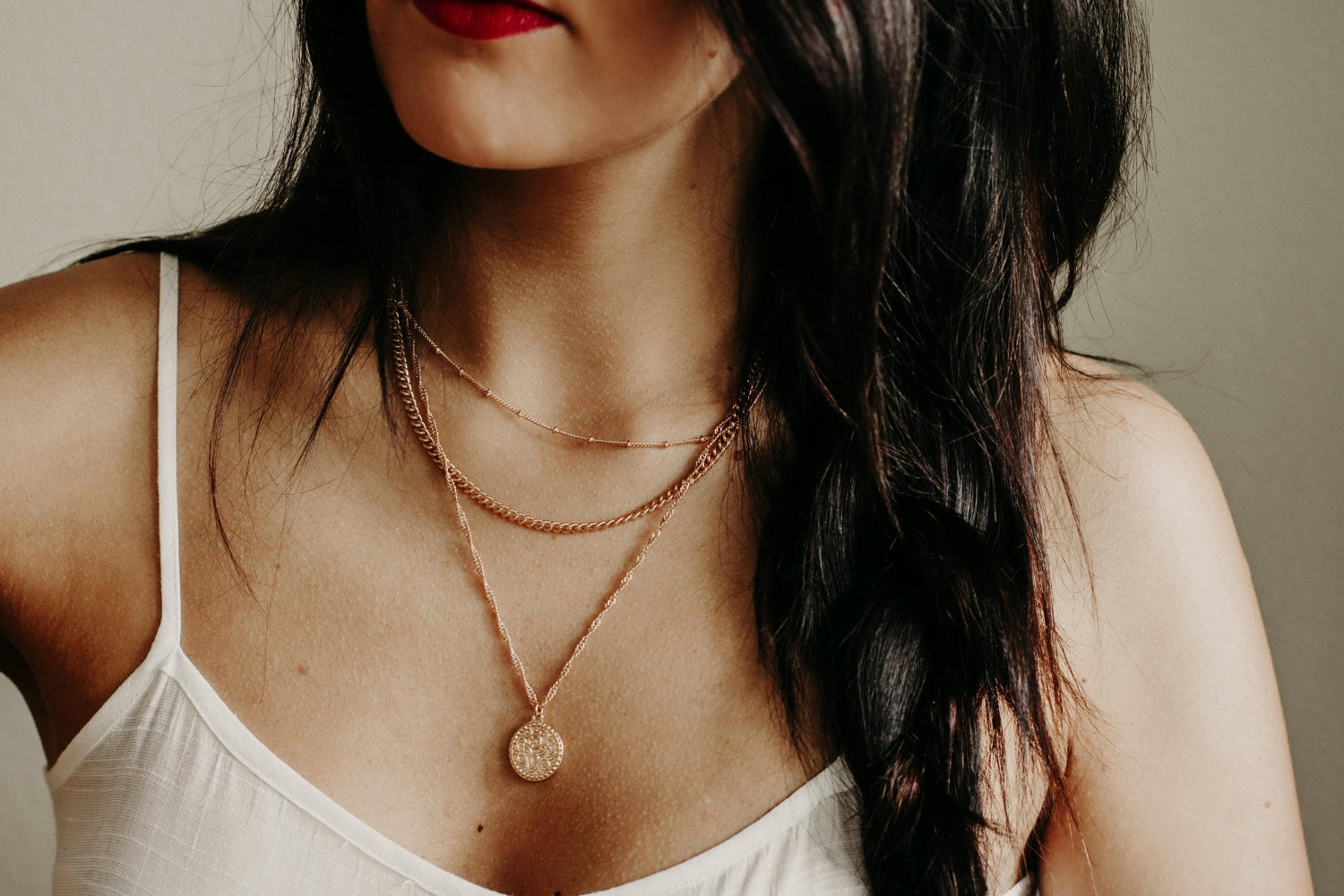
For simple chains, placement is more straightforward. These usually sit exactly where the length measurement suggests. If layering chains, measure each length separately. This prevents pieces from overlapping in unintended ways and helps maintain visual balance.
Statement necklaces sit higher on the neckline. They may appear shorter once worn because of their structure or stiffness. When considering how to measure a necklace length for this style, allow for how the design curves around the neck rather than hanging straight down.
A clear measurement helps you avoid fit issues and ensures the necklace sits where you expect. Whether you use an existing piece, a tape measure, or a string, the process stays straightforward when you follow the right steps. Over time, learning how to measure a necklace length becomes second nature and leads to better purchasing decisions.
At Bryn Mawr, we believe proper sizing matters. Our services are designed to help you choose jewelry that fits comfortably and suits your style. If you want to learn more or need guidance, explore our services and see how we can assist you.